
AXIOM Claude Code · 7.5 s · silent
Gold, steel, and black parts lock together into a puzzle on a marble plinth in an empty studio.
Case study · AI-assisted production
I ran three rounds of short films with two AI coding agents, Claude Code and OpenAI's Codex. They built everything in Blender with code. After each round I watched the films and gave notes, and my notes became the rules for the next round. Round 3 ended with this launch film for a camera that doesn't exist.
The setup
I wanted to see if I could direct AI the same way I work with a post team, with a clear brief up front and notes on every cut. Each round had one brief with a broad challenge. Claude Code and Codex each came up with their own concept and built it in Blender with Python, including the models, lights, animation, and sound.
Between rounds I watched the films like any other edit and wrote notes. For Round 3 I planned the production with AI help. I set up the departments, the handoffs between them, five review checkpoints, and the standards for each one. An AI director ran it from there, and I reviewed the finished films.
The films
Product study
Gold, steel, and black parts lock together into a puzzle on a marble plinth in an empty studio.
Ceramic and titanium arches settle around an amber optic.
Motion piece
A pop-up book bursts into a glowing paper carnival in a child's bedroom at night.
A mechanical seed winds up, leaps across a meadow, and blooms into a flower.
Product launch
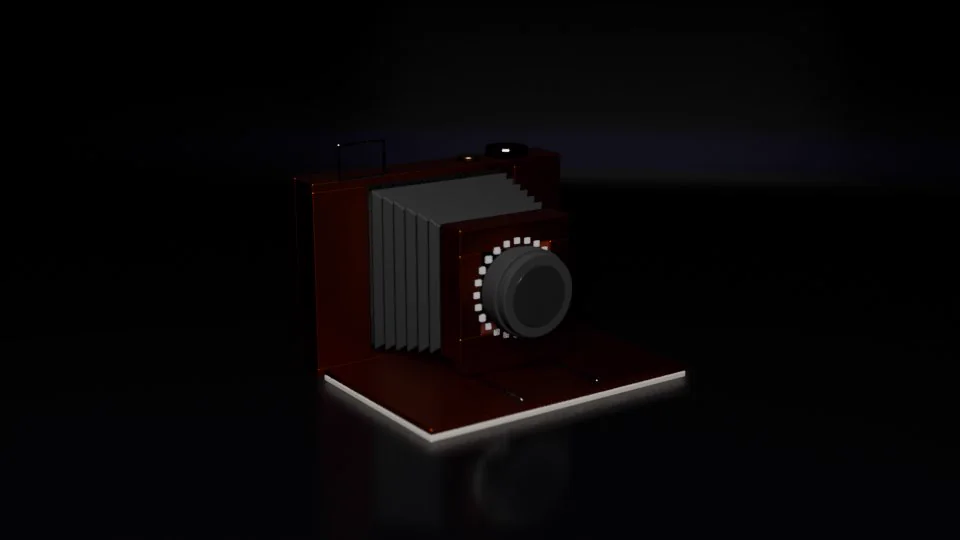
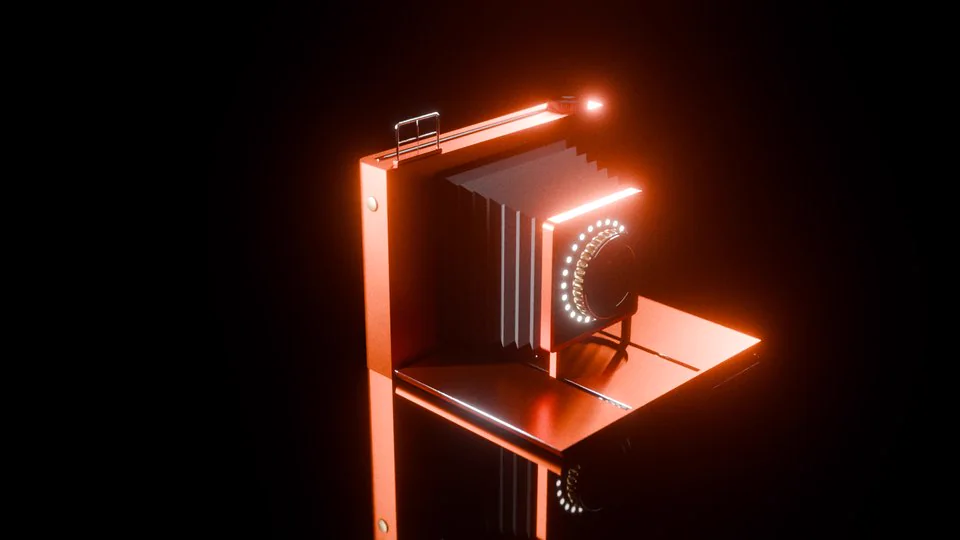
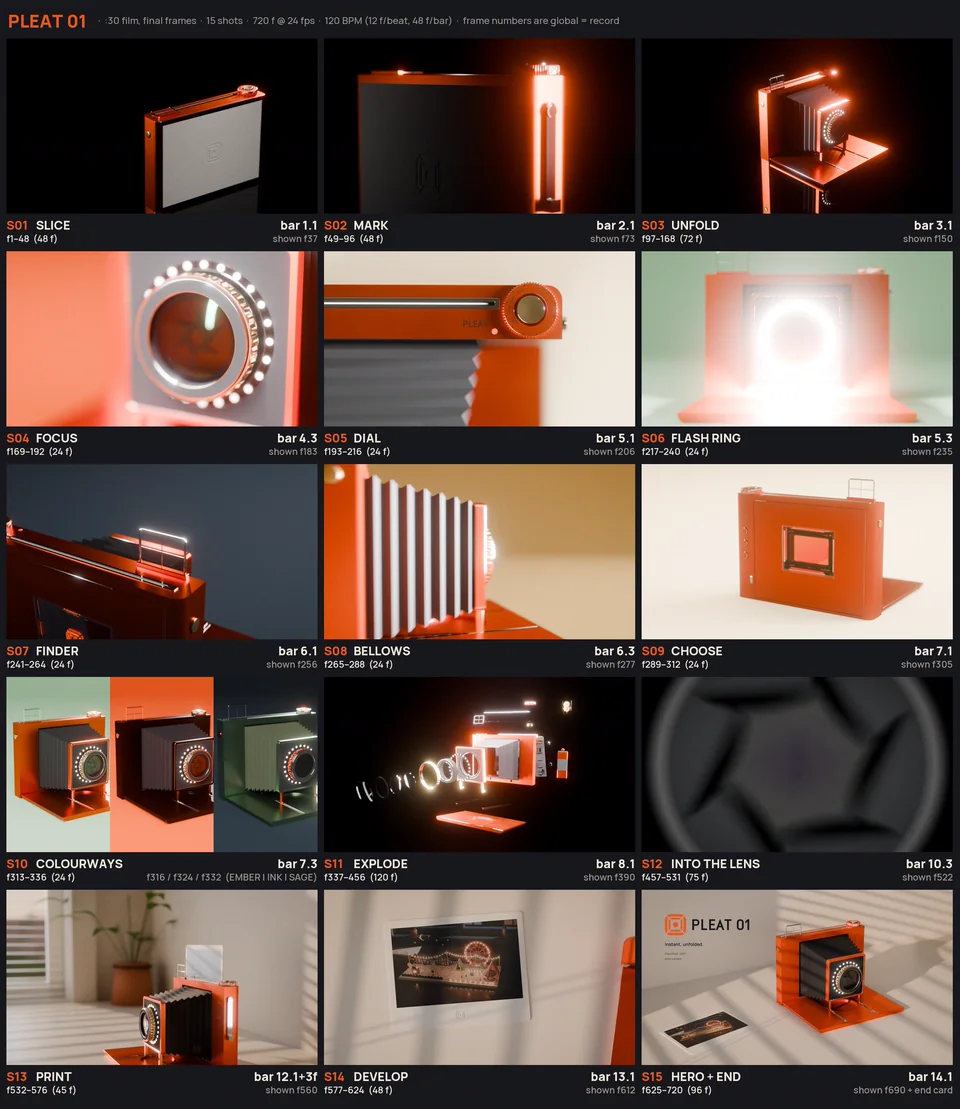
A pocket-folding instant camera. The :15 got its own music edit instead of a trimmed :30 track. The full :30 is at the top of the page.
A portable directional light. Turn the dimmer, pivot the head, and the light reveals a coastline at dusk.
Both agents got the same brief each round and came up with different ideas. I ran this as a creative experiment, so the pairs aren't a software benchmark.
The feedback loop
After Round 2 I gave the kind of notes I'd give in any review:
After the camera moves closer to the Ferris wheel and dollies across it, the camera kind of stutters. It should be one seamless motion, easing into each moment.
The fireworks stop and hang in the air for a beat before popping. Keep them moving up until they pop, never losing energy.
Can you build out the room a bit more? A window showing it's night time, and a street light shining in.
Those shots got fixed in MIDWAY. Then each note went into the Round 3 brief as a standard every shot had to pass.
Codex got notes too. I liked the SUNBREAK character but asked for a more natural world and a better sky. Codex rebuilt the meadow and the sky and left the character and animation I'd already approved alone.
Round 3
For PLEAT I set the production up like a studio job. There were nine departments: research, brand, industrial design, modeling, lighting, animation, edit, sound, and delivery. Each one owned its own files. Work passed between them through shared specs, like the product's dimensions, the logo geometry, a rig definition, and a beat grid with every sync point in the film down to the frame. Nothing moved forward until it passed a checkpoint.
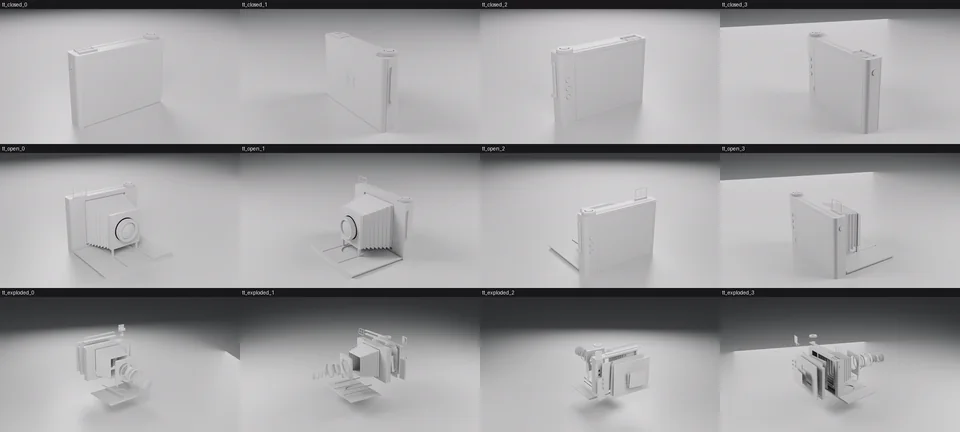
At the animatic checkpoint, the exploded view of the camera was correct but timid. It went back and got staged bigger before any final render time was spent on it.
One Claude session was the director. It briefed up to four specialist agents at a time, reviewed their images, and made creative calls within the standards I'd set.
| Department | What it delivered |
|---|---|
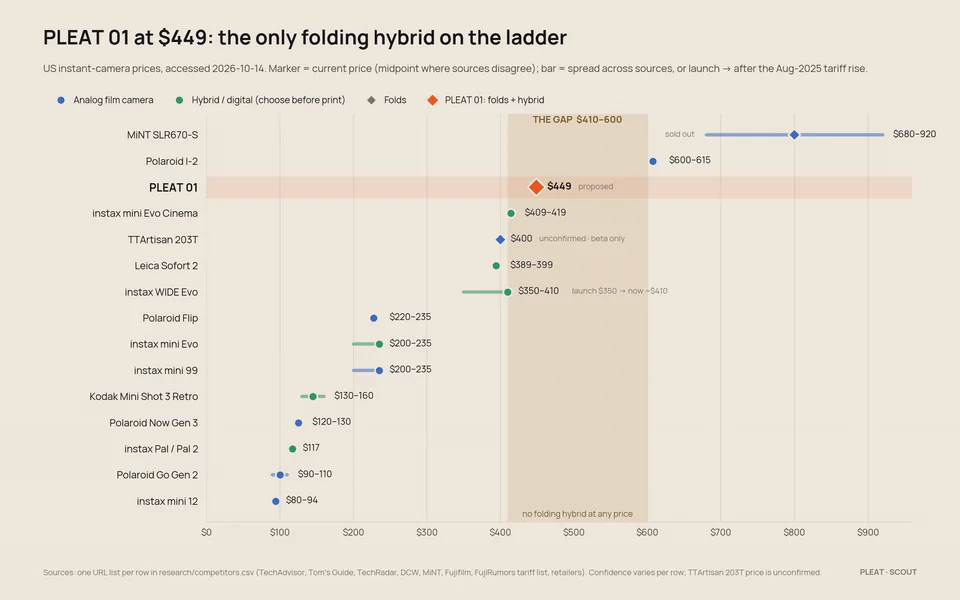
| Research | Market report with dated, cited sources, a 15-product competitor matrix, and a price ladder |
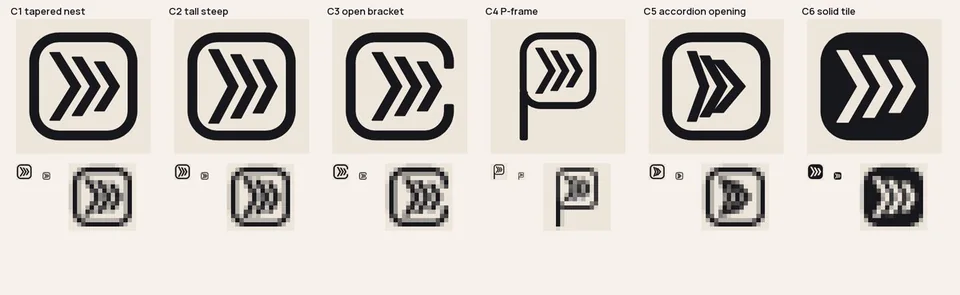
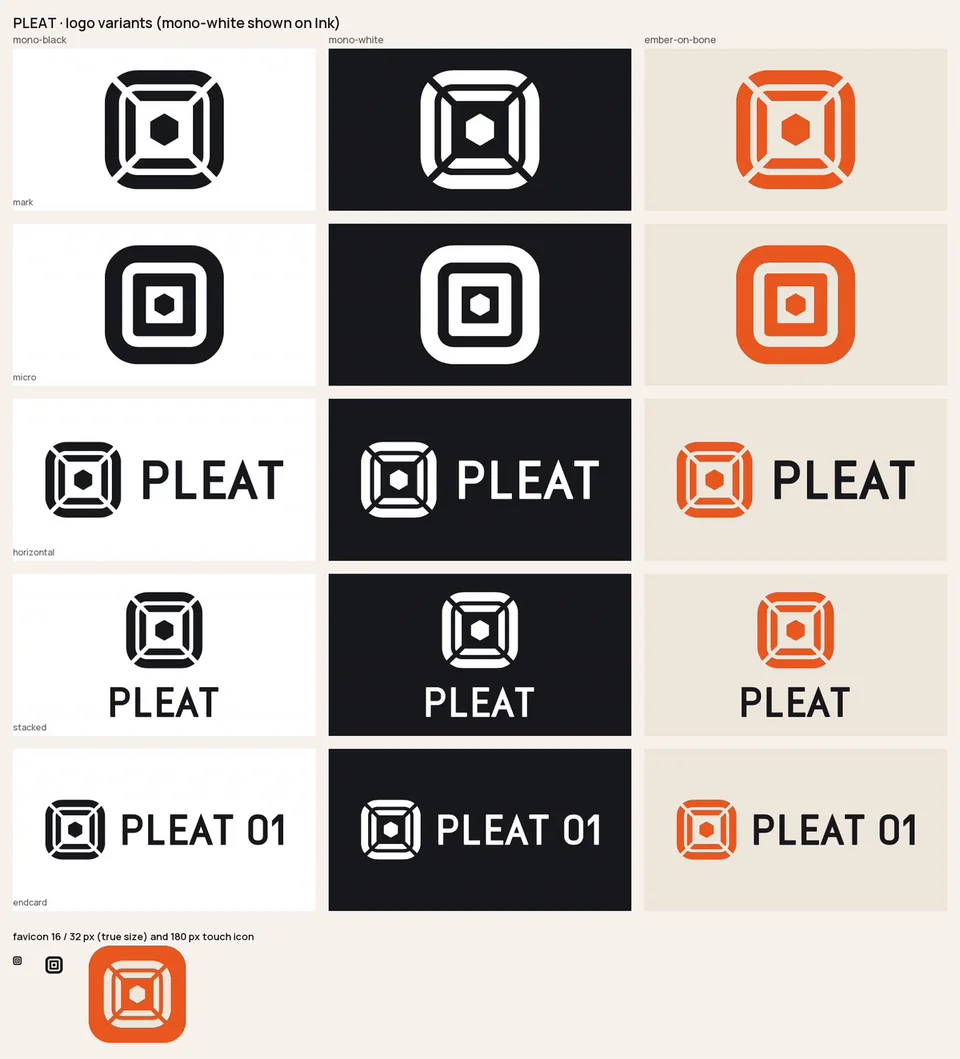
| Brand | Name check, logo exploration, custom wordmark, color and type system, brand book |
| Industrial design | Product spec, mechanism and clearance notes, dimensioned drawings, explode plan |
| Modeling | A 71-part rigged model built from the spec, with collision checks across the mechanism |
| Lighting | Materials, three sets, and one color look for the whole film |
| Animation | 15 shots in two teams, every hit on its frame of the beat grid |
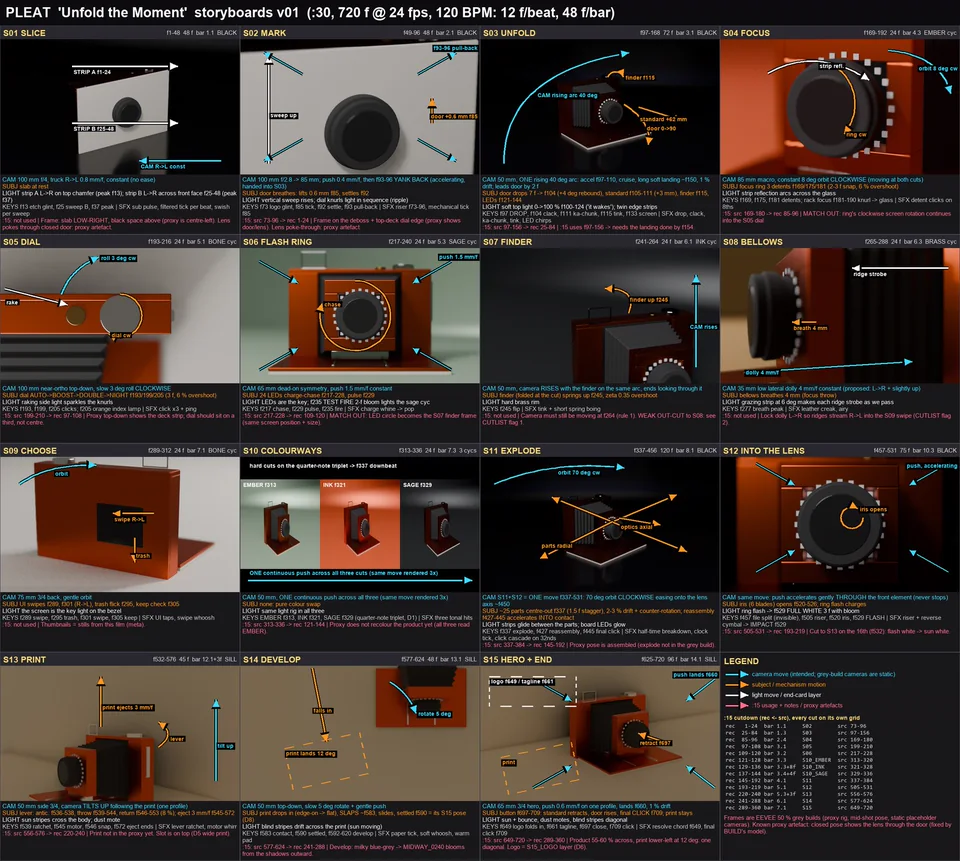
| Edit | Storyboards, edit lists for the :30 and :15, a cut list with a reason for every cut |
| Sound | Original score and effects synthesized in code, with separate :30 and :15 mixes |
| Delivery | Encodes, 4K stills, contact sheet, and a full technical check |

| Measure | PLEAT result |
|---|---|
| Final shot frames | 784 frames, 5.25 s per frame on average, 68.7 GPU-minutes on an RTX 4080 SUPER. Previews, look tests, and revisions are not included. |
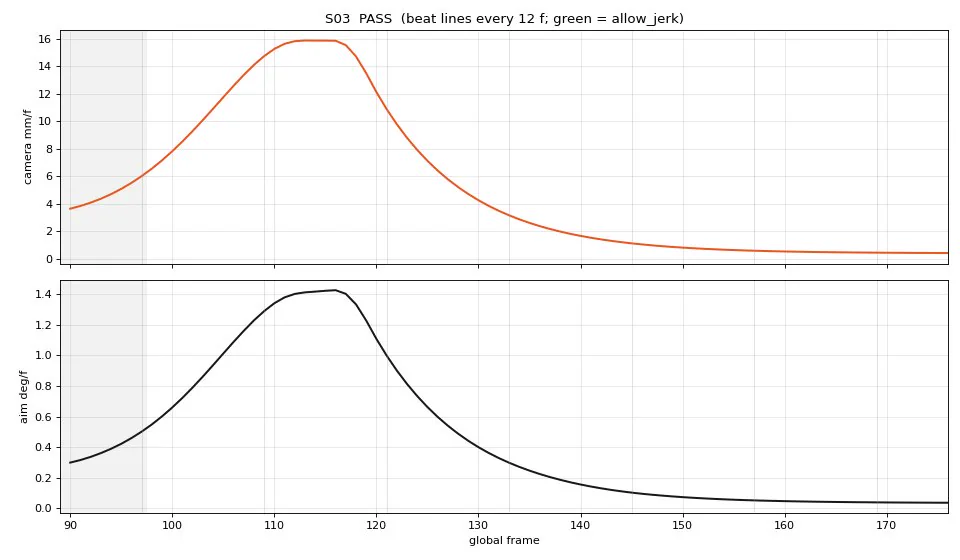
| Camera smoothness | All 17 shot files passed the stutter check (speed can't change more than 12% between frames, with a tolerance for very slow moves). |
| Sound | Both mixes at −16 LUFS integrated and −1.5 dBTP. Every effect starts within 5 ms of its picture frame. |
| Delivery | Frame counts, durations, color tags, decode accuracy, and file integrity all checked. Anything that failed was fixed before delivery. |
| Elapsed time | About 21 hours from kickoff to delivery. Most of that was waiting for my AI plan's usage limit to reset, which happened four times. |
These numbers tell me the camera doesn't stutter and the files are correct. Whether the film is any good, I decided by watching it.
At work
Previz first. I could send a brief in the evening and review an animatic cut to temp music the next morning, so motion and timing are locked before anyone starts lighting.
Versions next: cutdowns, colorways, and aspect ratios built as variations of one project, with every cut still on the beat. I'd also have it run technical QC on every export, checking frame counts, loudness, color tags, and dropped frames, so my review time goes to the creative. And for product work, if the model is built from a spec file, an engineering change means a rebuild instead of a remodel.
I'd keep the story, the notes, the final cut, and the client conversation.
If you try this